Author: mic1234567890
-
Padmasadhna
https://www.artofliving.org/in-en/yoga/yoga-poses/padma-sadhana
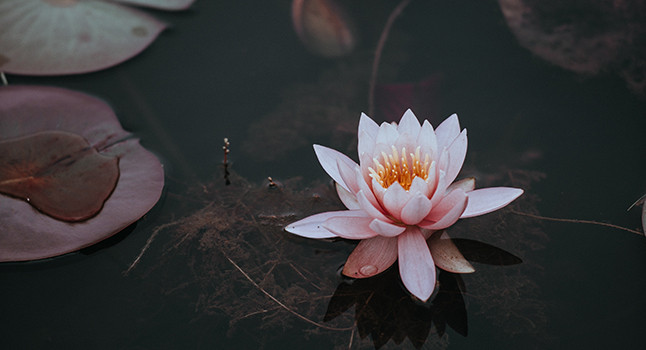
Usually when one thinks of a lotus, what comes to mind? A fully blossomed flower, where each petal is opening up to the sky. Now observe where does the lotus originate from? Mud. Yet, the lotus remains unstained and untouched by the pond. Imagine if we could also be like the lotus flower – untouched by day-to-day events and blossom with love and joy. Padma Sadhana is a practice that could make such blossoming possible. Designed by Gurudev Sri Sri Ravi Shankar, this beautiful yoga practice comprises a simple sequence of yoga postures, Nadi Shodhan breathing technique (pranayama), and meditation.
Join a Free workshop on Yoga, Meditation and BreathFull Name *Email *Phone *+91Select Date *Time *Time*I agree to the Privacy PolicyI want to experience meditation!
Unlock your potential with Padma Sadhana
The weight loss factor!
Besides its mental and emotional benefits, the Padma Sadhana is designed for a complete body workout. The long holds in to the poses leads to a firmer body. The workout takes around 20 minutes of your time but the intensity of the workout is such that it works on the body post 20 minutes and helps to burn a few calories post the workout.
Gurudev Sri Sri Ravi Shankar says doing PadmaSadhana gives you access to your inner strength. When practiced daily, this 45-minute sequence of yoga poses can lead to a calmer mind, healthier body and more peace. This set of graceful yoga asanas (postures) helps prepare the body and mind for deeper meditation. One of the key tips is to stay relaxed throughout the practice. Doing Padma Sadhana before Sudarshan Kriya enhances your experience, so that you remain uplifted throughout the day, untouched by the mud around you.
‘Padma’ means lotus and ‘Sadhana’ is your effort. This practice should therefore be as effortless and light as a lotus. Sadhana is the gentle nudge to get on to the mat and Padma is the unfurling of your potential, layer by layer. Together, Padma Sadhana can help you blossom from within through the practice of yoga postures.
5 elements for a blissful Padma Sadhana
According to the Agama tradition*, it is believed that the Devi (Goddess) sits on a five-layered seat or asana. The base of this seat is a tortoise, which represents stability. Stability alone is not enough. You need awareness also. So the second layer is the snake, which represents awareness. Awareness can lead to activity in the mind. So above the snake sits the lion, which symbolizes grace. Above the lion sits the Siddha, the perfect sage. And above the perfect sage sits the lotus, the symbol of full blossoming. When our yoga postures have all these five qualities – stability, awareness, grace, perfection and full blossoming, then the divinity dawns in us and that is Padma Sadhana.
You can learn how to do Padma Sadhana at [The Art of Silence (Part-2) Course] and DSN Course.
Make PadmaSadhana a part of your daily morning and evening yoga practice and unlock your inner energy. Read some tips on padmasadhana
*Agama tradition is the traditional form of community temple worship.
https://www.youtube.com/embed/4EBswVUU3po
-
The 6 types of wealth – Shata sampatti
Wed, 20/12/2017 Bangalore, India
Since ancient times, it is said that strength of character is very essential. The Shat Sampatti are the six virtues that contribute towards one’s greatness in character – hence termed as wealth. In this article, Gurudev Sri Sri Ravi Shankar explains each of these six virtues.
1
Shama
Shama means to have that inner tranquillity of the mind. The word Shanti (peace) comes from the word Shama. This is a very important quality. It is wealth that one should strive to acquire.
When the mind is not at peace, your intellect becomes dull and hazy, and you are not able to listen or understand what someone else is saying. To sharpen the intellect, you first need to calm the mind.
Suppose you see someone breaking a rule – if you get angry, you are only making yourself miserable. Instead, keep the mind calm and steady. If need be, educate the other person about their mistake. And if they are not willing to understand, then ignore it and move on. You cannot improve someone else by getting angry at them. This ability to keep a calm mind under any kind of circumstances is Shama.
Join a Free workshop on Yoga, Meditation and BreathFull Name *Email *Phone *+91Select Date *Time *Time*I agree to the Privacy PolicyI want to experience meditation!
2
Dama
The second kind of wealth is Dama, which means having a say over your own senses.
Many times, when people travel overnight in a luxury bus or airplane to attend to some important work in the morning, there is a movie being played during the journey. Now, though they want to sleep, they continue watching the movie.
A moment comes when they say to themselves, “Oh, I have already seen this movie before. It’s the same rubbish. What is there to watch again?” Yet, the eyes say, “No, I want to watch and see what is happening”. Your eyes do not agree with you. Your intellect says one thing, but your eyes disobey and follow something else.
To have Dama means to have a perfect alignment between your mind and your senses.3
Titiksha
Titiksha means forbearance. It means the ability to endure even that which is not of your liking. Now, it is not possible that everything will go as per your liking. If you tend to lose your calm and presence of mind when some things do not happen as per your expectations, then that shows a lack of Titiksha.
Having Titiksha means to be patient and to have forbearance. To maintain a balance and be able to bear it when undesired situations arise in life – that is a sign of having Titiksha.
Suppose someone is very unpleasant to you. If you lack Titiksha, then it rattles your mind and throws you off balance. With Titiksha, you can move on and keep the balance.
4
Shraddha
Shraddha means to adore something that you don’t completely know. You do not fully know it, yet you feel there is something wonderful about it and have a deep interest to know more about it.
You do not need to have faith in what you already know. Faith is always in something that you do not know, yet you feel a sense of connectivity to that unknown.Without Shraddha, nothing can move in life. Your doctor tells you to take a certain medicine. You take the medicine because you have faith in the doctor. If you do not have faith in the doctor, you will not touch the medicine. So, our life runs on faith.
The city’s electricity board gives you electricity having faith that you will pay the bill at the end of the month. Putting a foot forward before you get the fruit of the action is called Shraddha.5
Uparati
Uparati means enjoying anything that you do – even if it is a small thing. It means to have a sense of enthusiasm in whatever you do.
When there is a lack of Uparati, then there is dejectedness – no interest and no enthusiasm. You do not like doing anything if you lack Uparati. One who does not have enthusiasm cannot create or invent anything new. Uparati means to do everything wholeheartedly, finding joy and taking total interest in it.“Discover your inner calm with research-backed breathing practices! Sign up>> for the Art of Living Online Meditation & Breath Workshop today.”
6
Samadhana
Samadhana means contentment. This is also a gift – a true wealth. A person who is content exuberates a certain sense of joy from deep within. He exudes certain positive vibrations that everyone else would love to have.
A restless person cannot be an inventor. Newton struggled all his life. But when he felt overwhelmed with desperation, when his brain got so tired of thinking and calculating, he sat down to rest below a tree. When he took a moment of rest, the apple fell before him and he discovered Gravity.
When you look at every invention on this planet with a keen sense of observation, you will find that it has come when people have gotten over their restlessness, desperation, and dejection. It has happened when they arrived at a point of breakdown, and relaxed. In that moment of total relaxation and contentment, creativity came to them.
Contentment is not lethargy. Do not confuse contentment with lethargy. Contentment is creativity, and creativity blossoms in us when there is Samadhana.
So, these are the six kinds of wealth. Each one is called a wealth because, like any wealth, some of it comes to us easily in life, while others we must make efforts to acquire. Some wealth must be maintained, otherwise it will disappear.